Leaderboard
Designing the flows that turn a casual round of golf into a tracked, social, competitive game — set up in seconds, scored at arm's length, and remembered long after the 18th.
Scoring a group round is still a paper-and-arguments problem
Golf is intensely social and intensely competitive, but the tools for playing with people haven't kept up. A foursome still juggles a paper scorecard, does handicap math in their heads, argues over who owes what on the wager, and watches the whole round evaporate the moment they walk off the green. Worse, the friend who didn't download an app gets left out of the scoring entirely — so the group defaults to the lowest common denominator: pencil and guesswork.
The brief across my engagement: design the core flows that make Leaderboard the effortless default for group play — fast enough to use between shots, inclusive enough that nobody is left out, and sticky enough that the round lives on after the round.
The round is the core object
Every flow I designed hangs off one object: the round. Setup configures it, live scoring fills it, the profile aggregates it over time, and the social feed broadcasts it. Designing around a single shared object kept the experience coherent — a player sets a wager once at setup and it follows them all the way to the settle-up, a guest added at the first tee becomes a real profile, and a finished round becomes a feed card automatically. Below, each flow is shown end to end.
Setup → Lobby
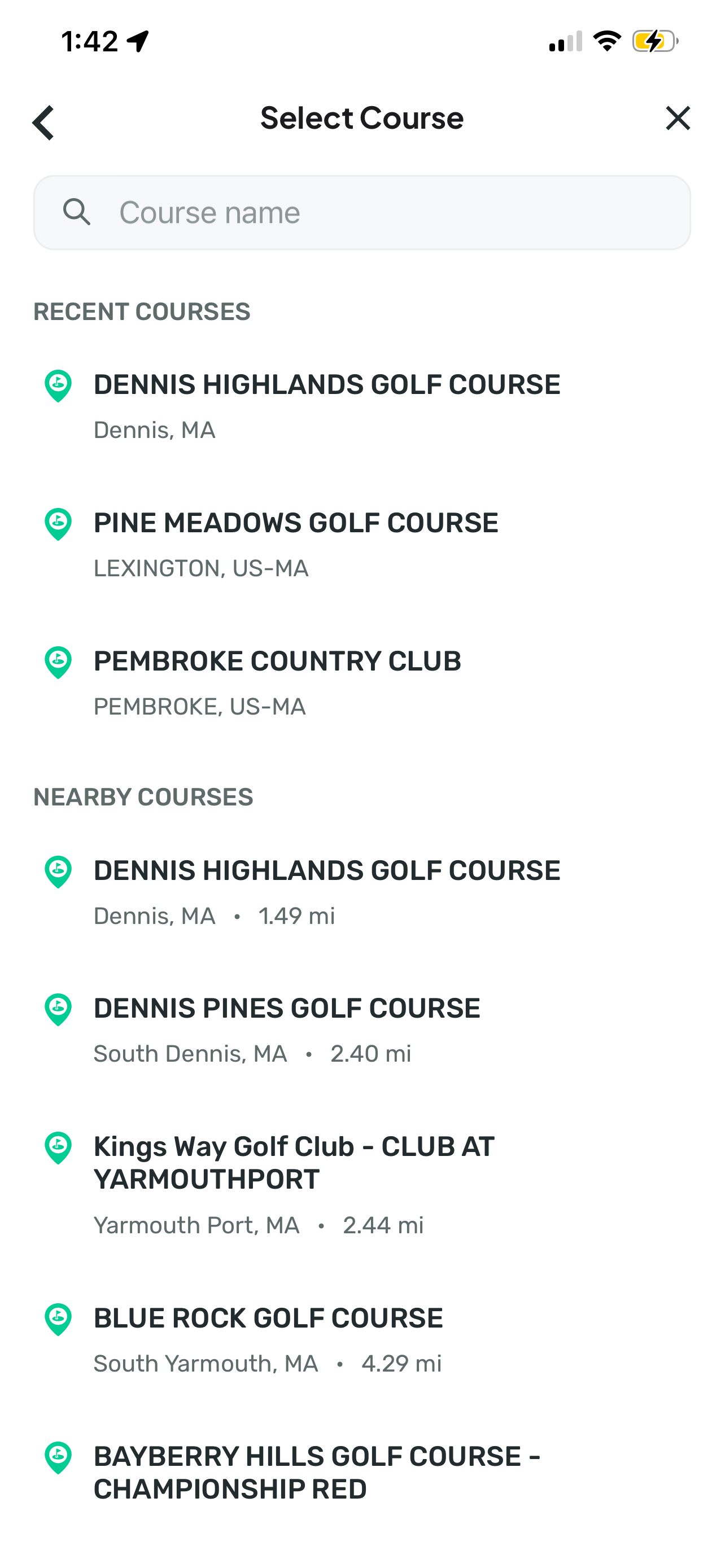
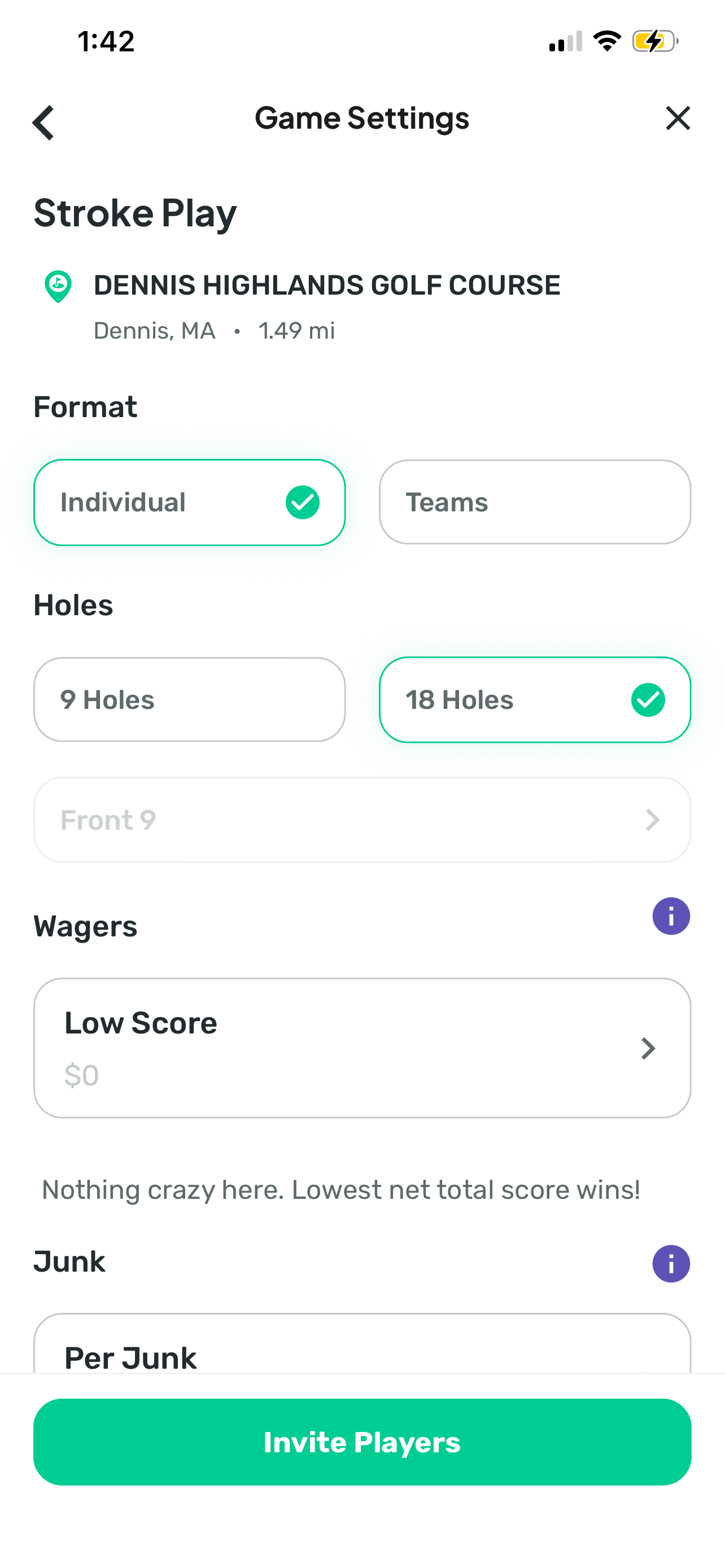
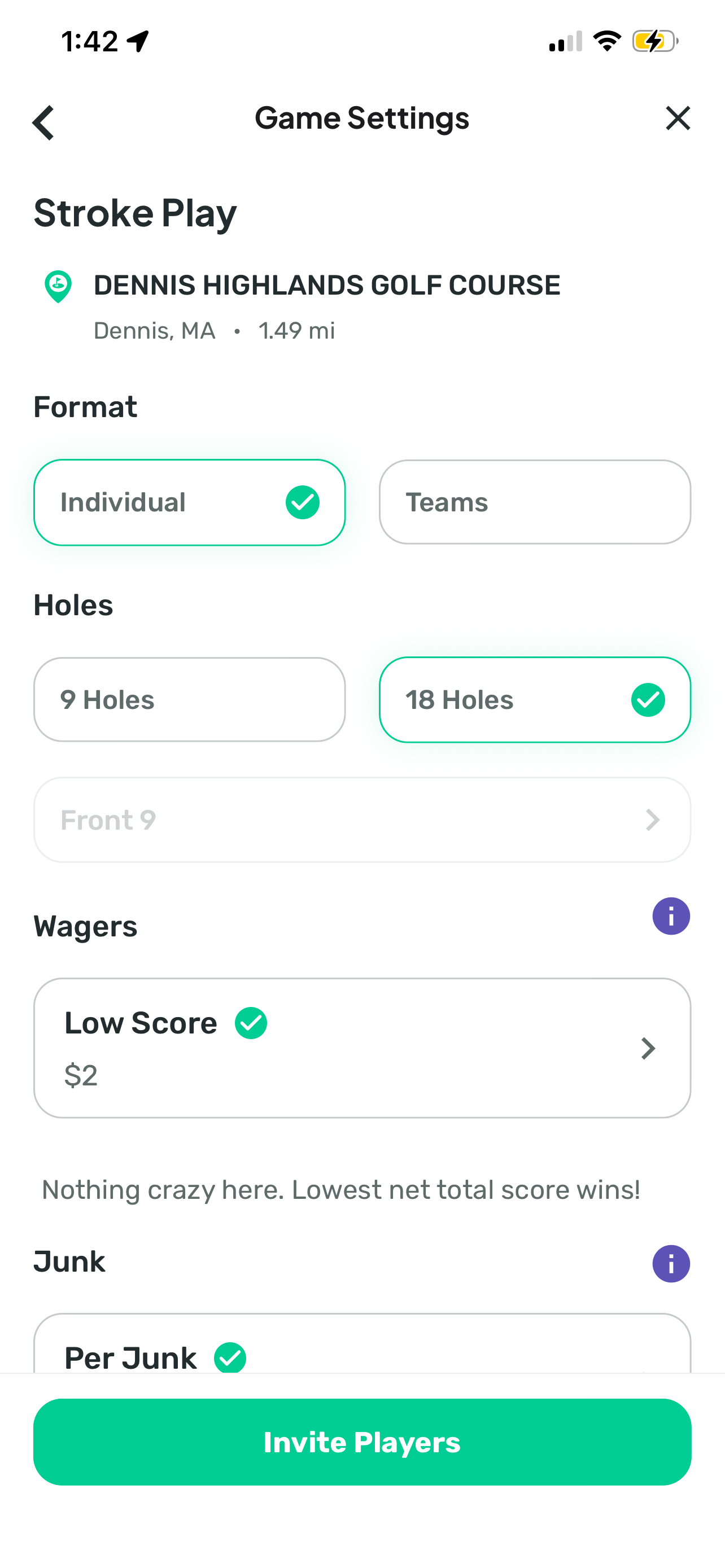
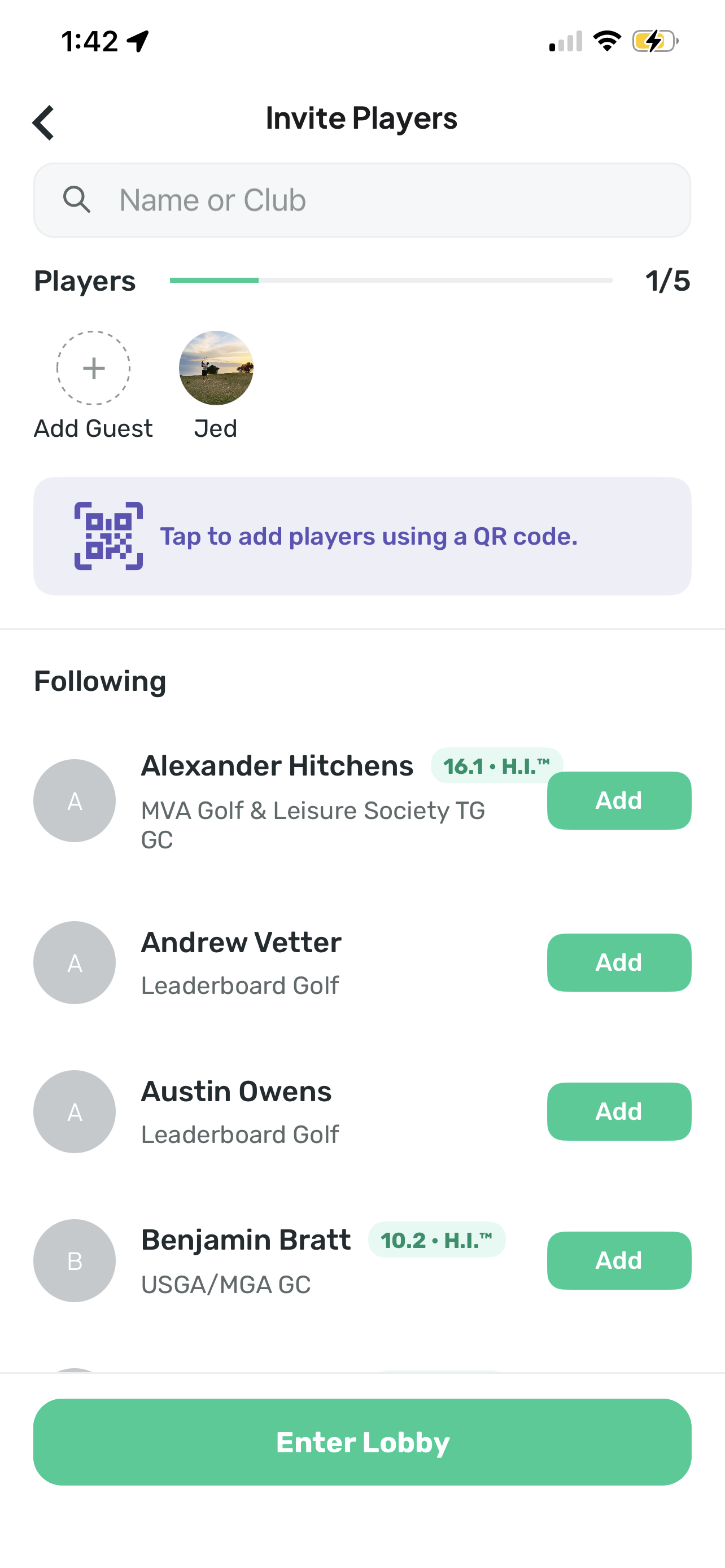
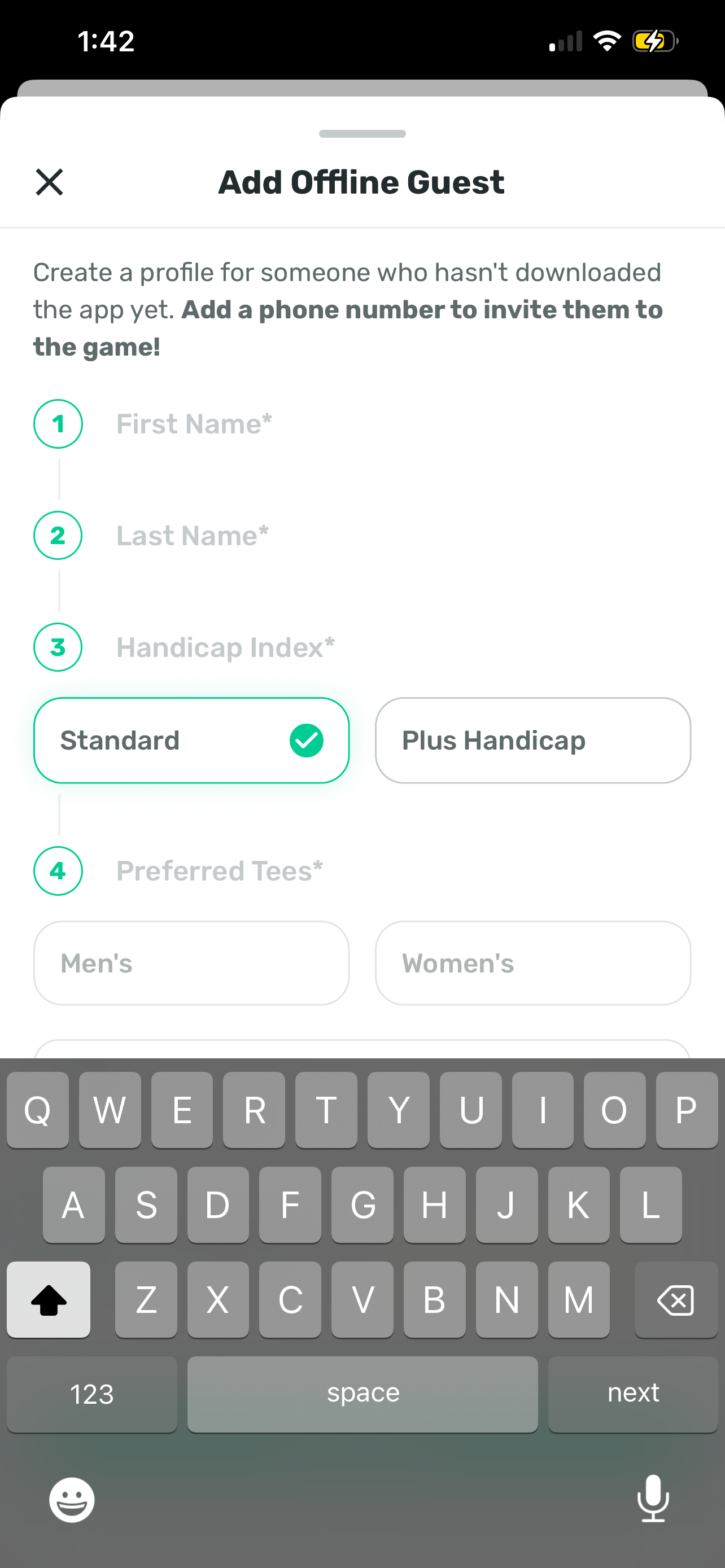
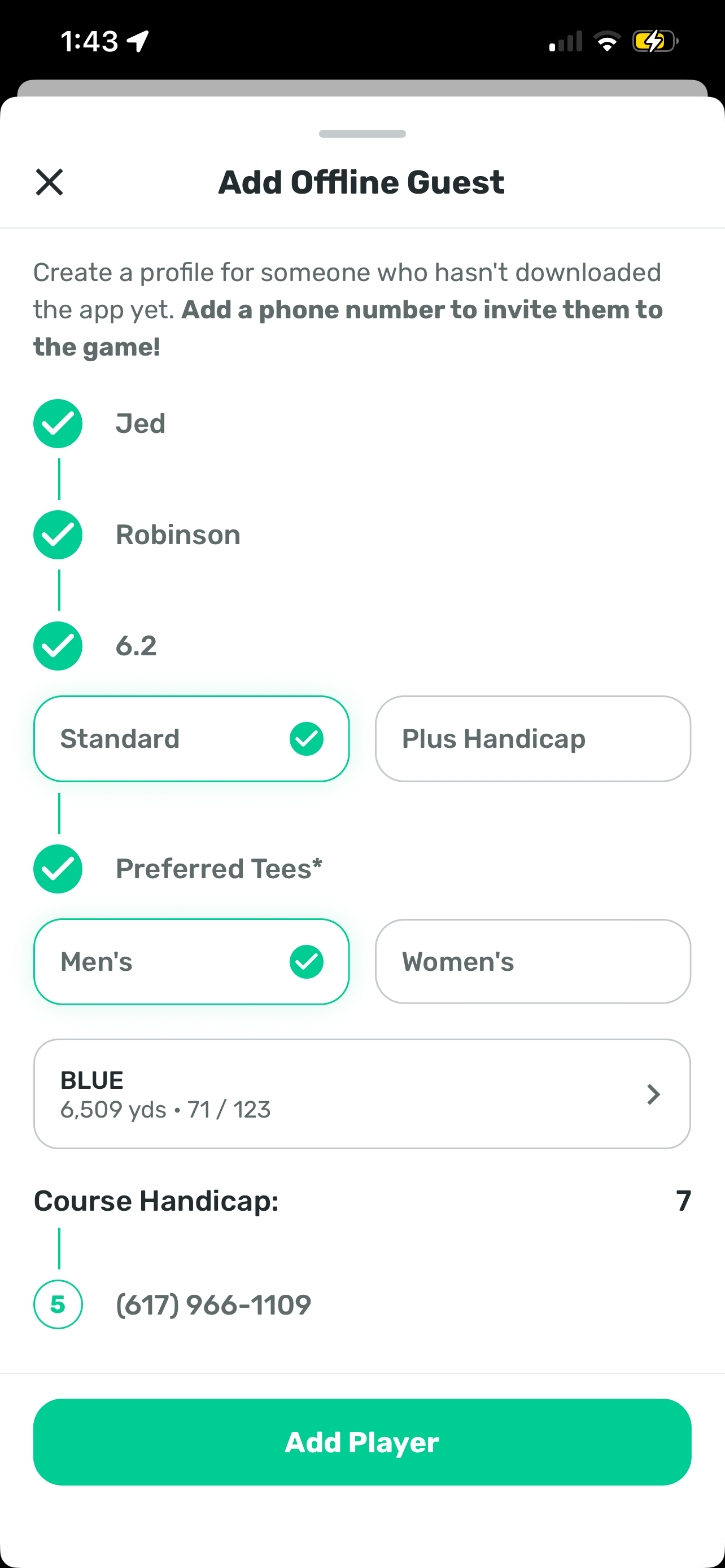
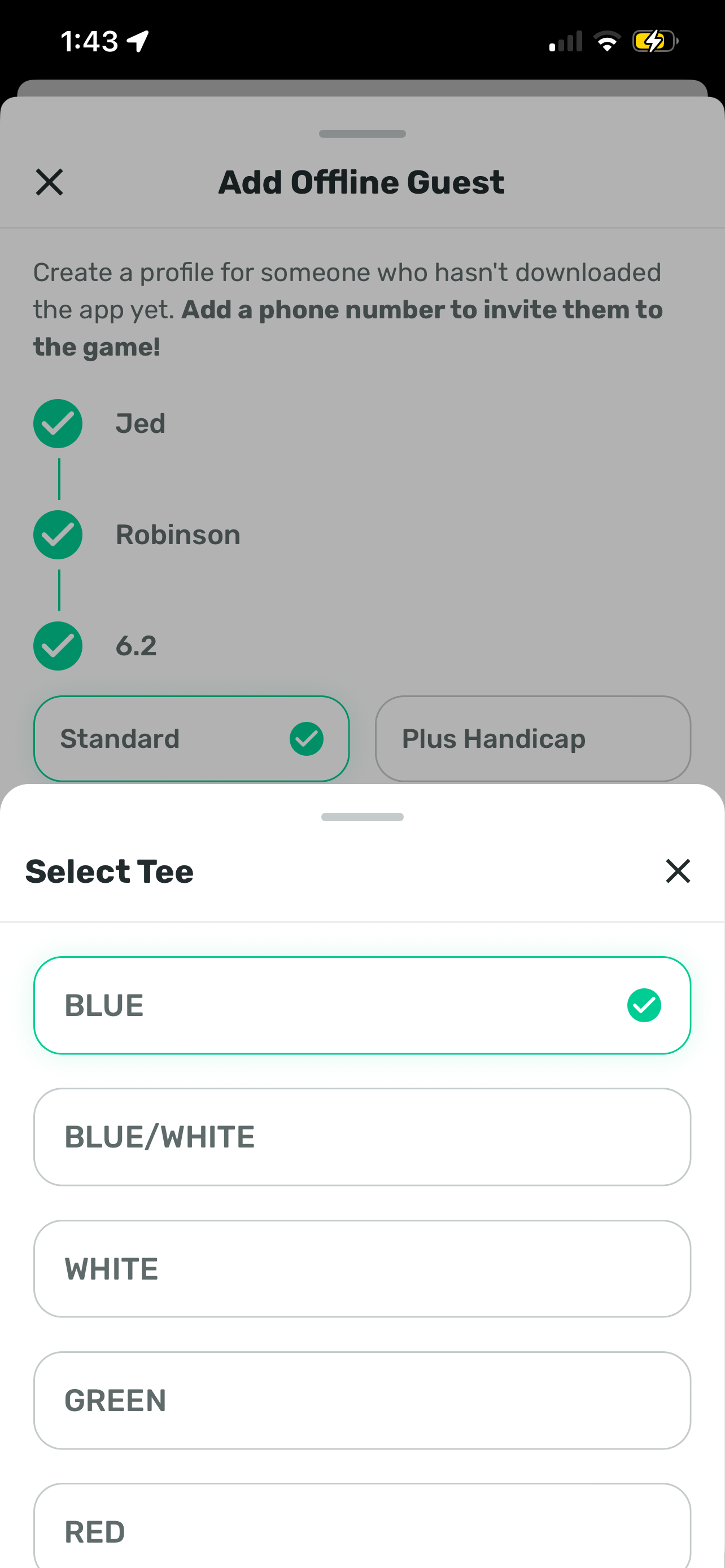
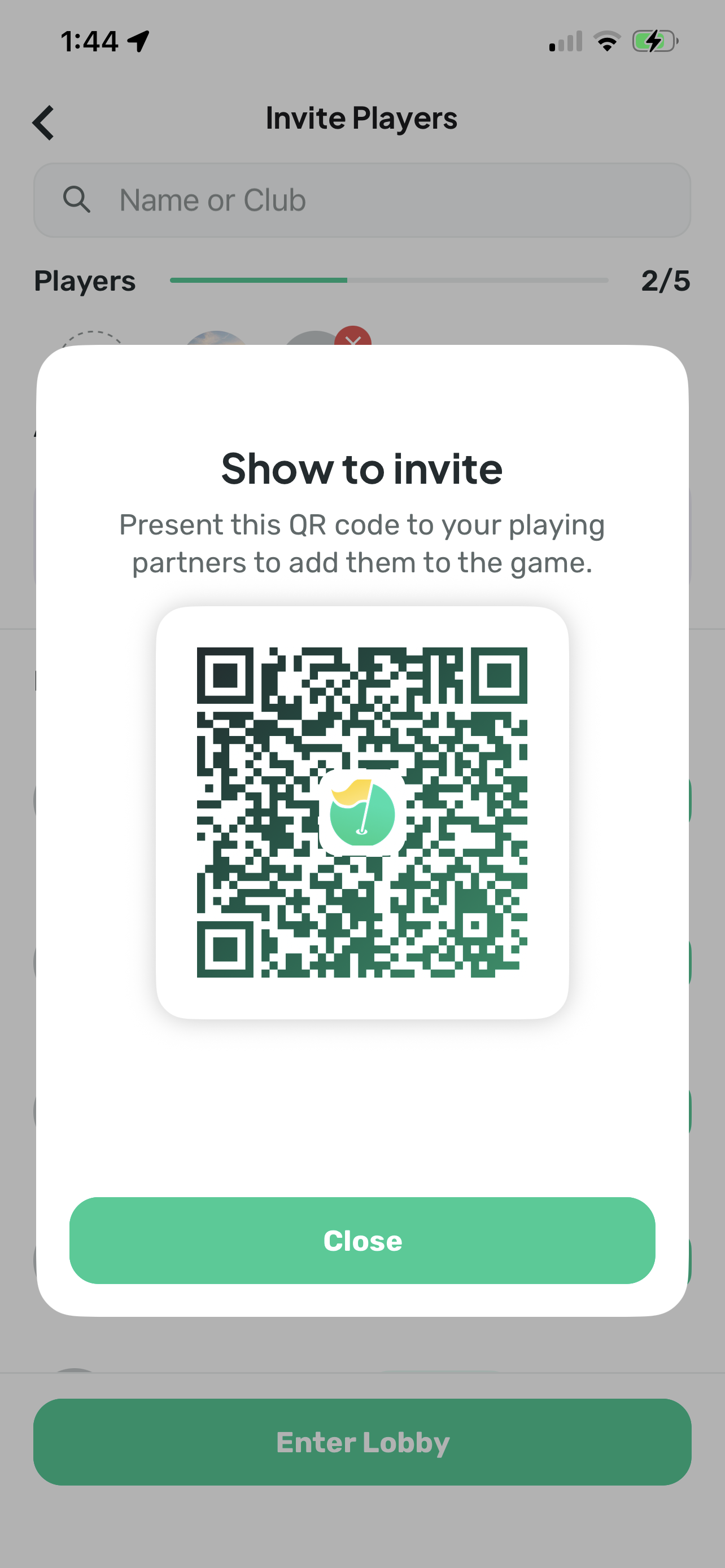
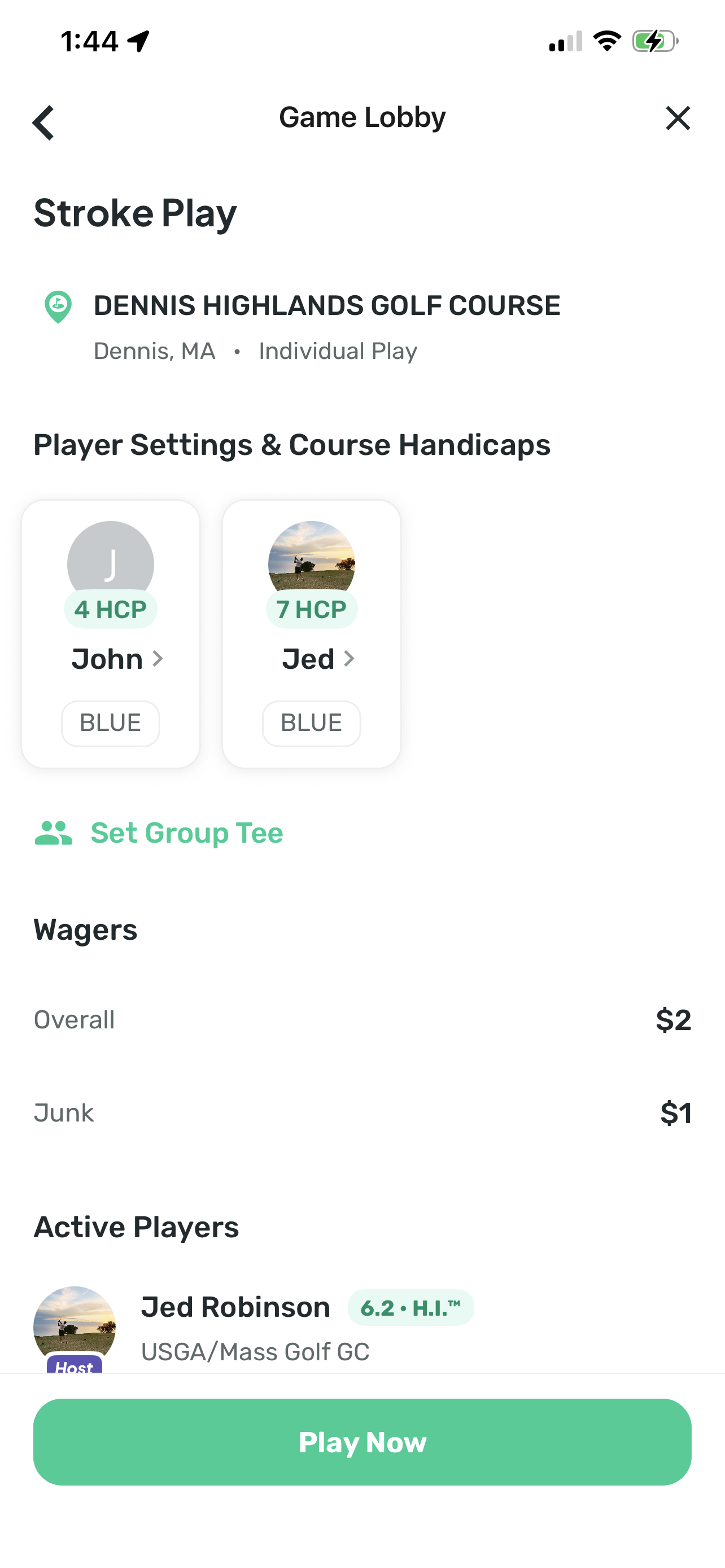
Pick a course, choose a format and wager, gather players (including non-users), and confirm everyone's course handicap before the first tee.
Live scoring
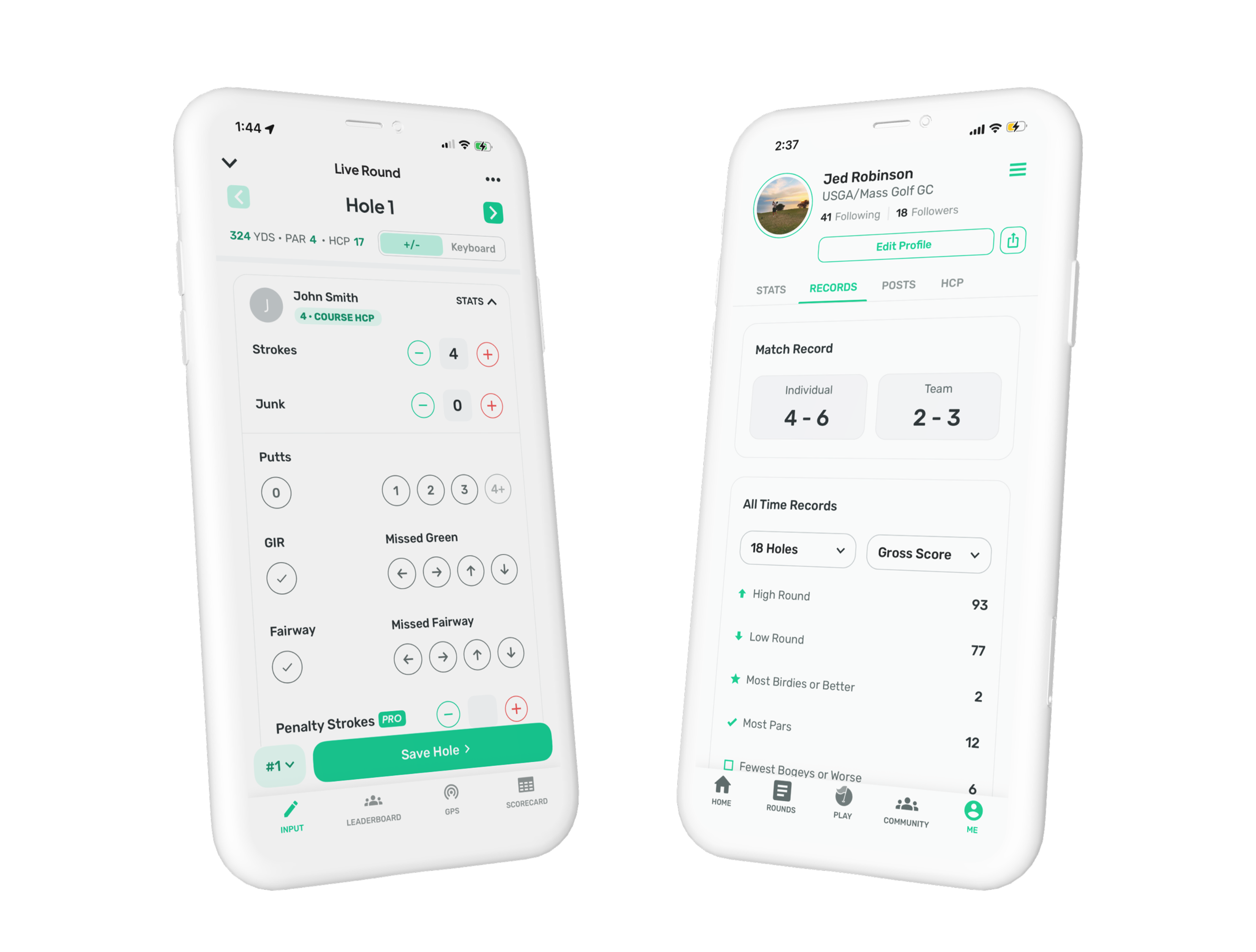
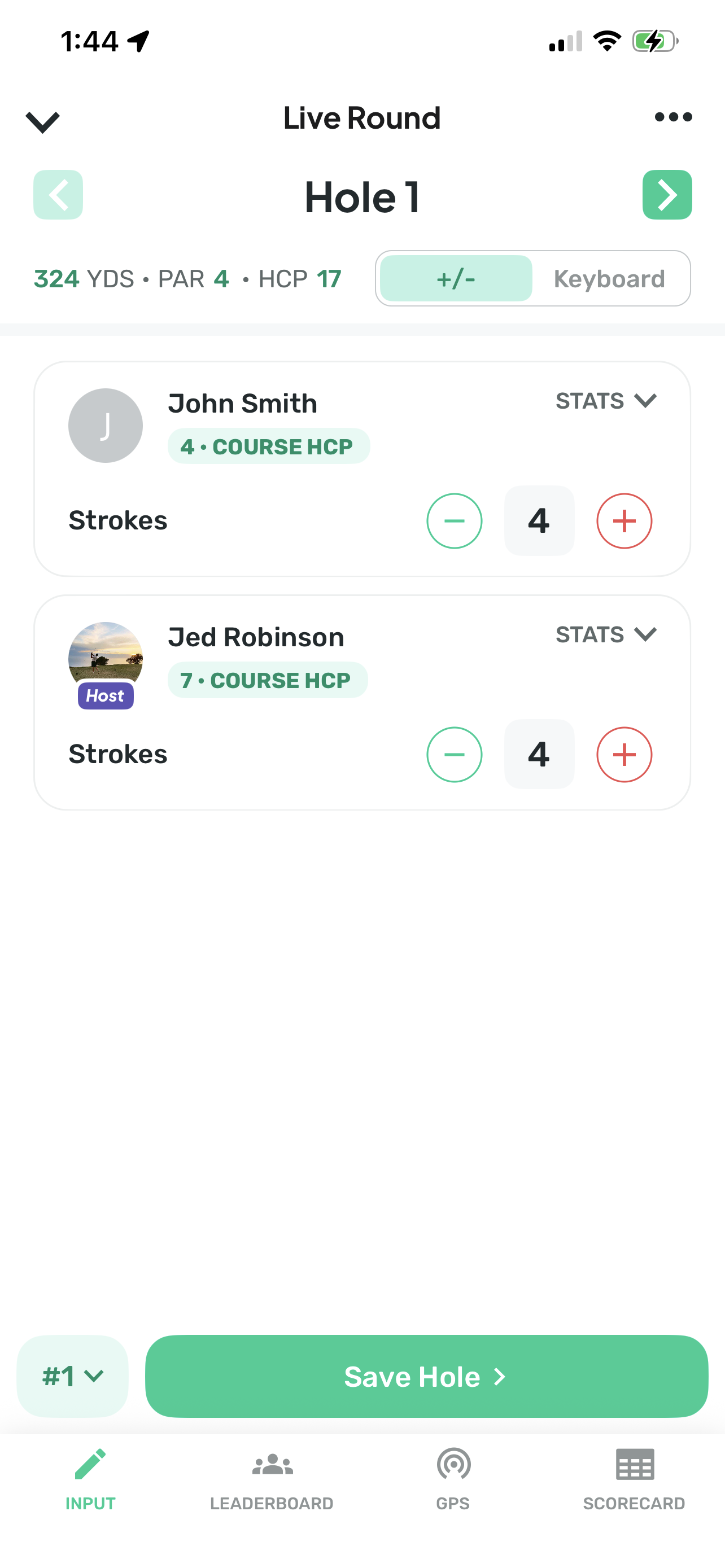
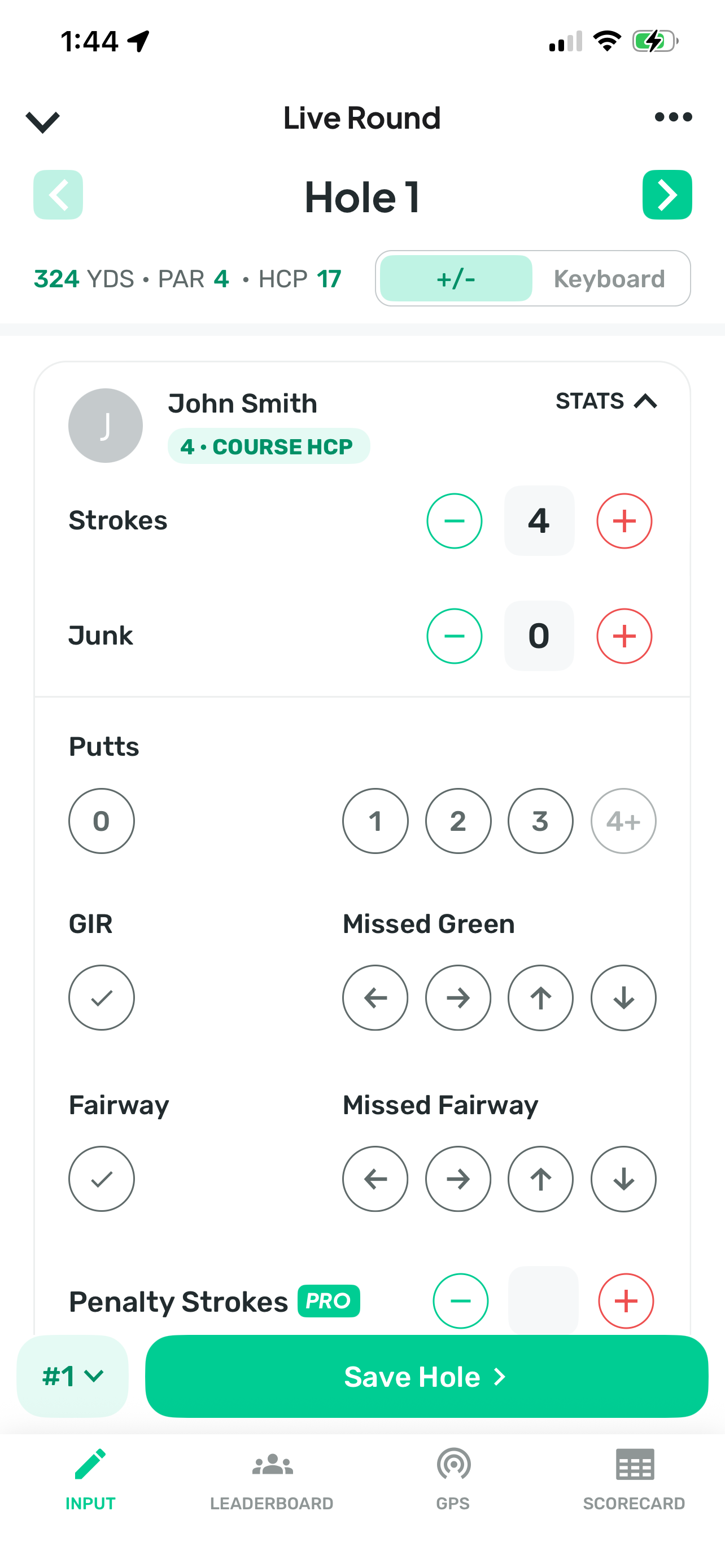
Enter strokes hole-by-hole with one thumb, with optional deep stats for players who want them — readable in direct sunlight.
Identity & progress
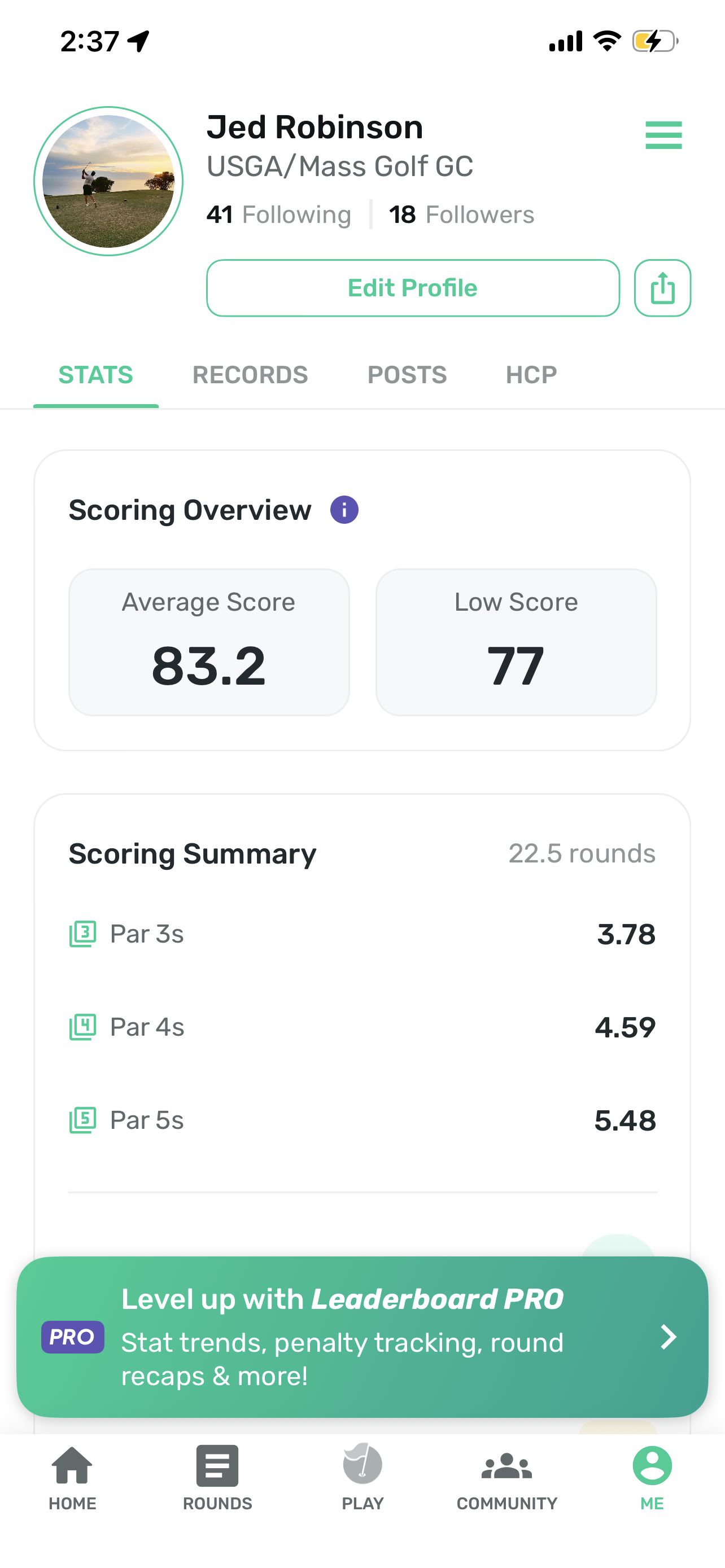
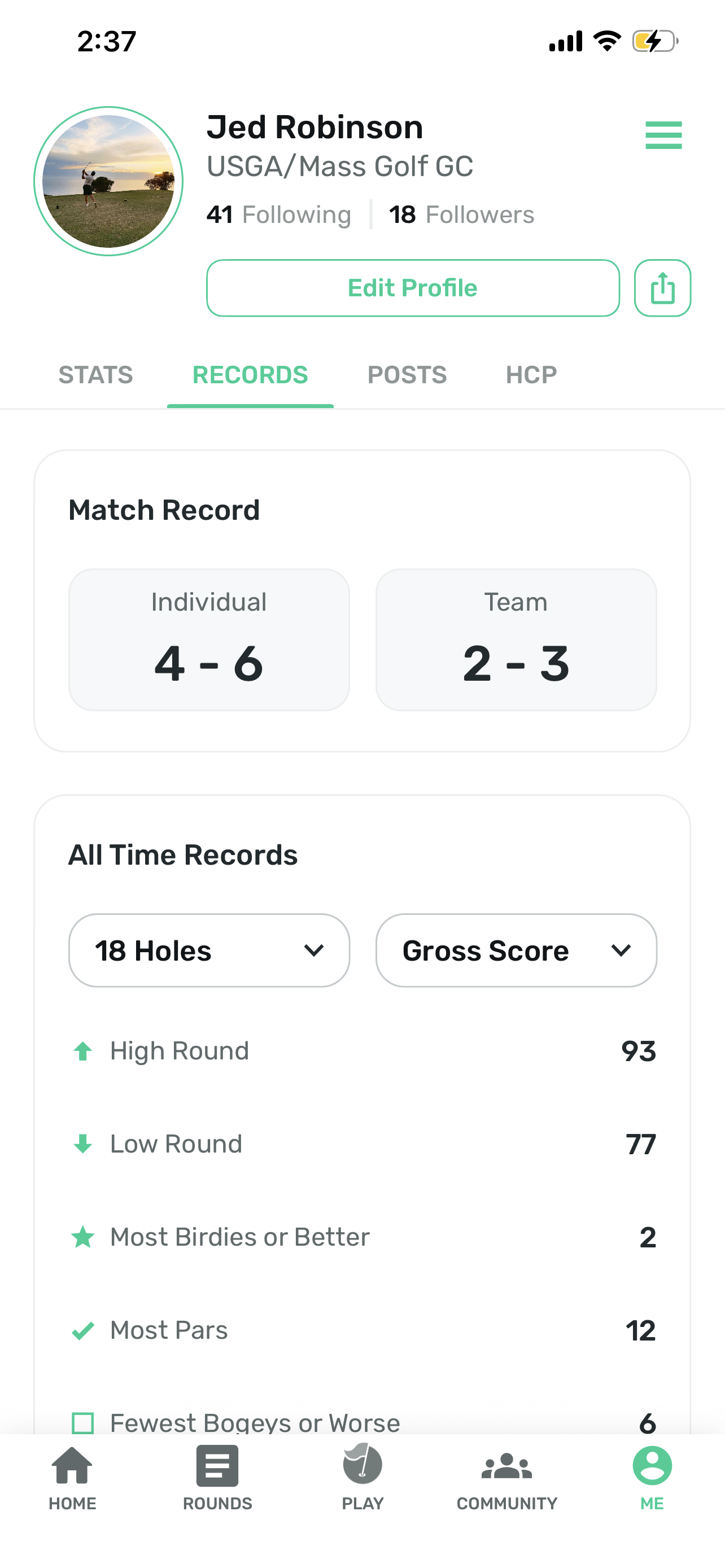
A profile that turns scattered rounds into trends, records, and an official, USGA-posted Handicap Index.
Social feed
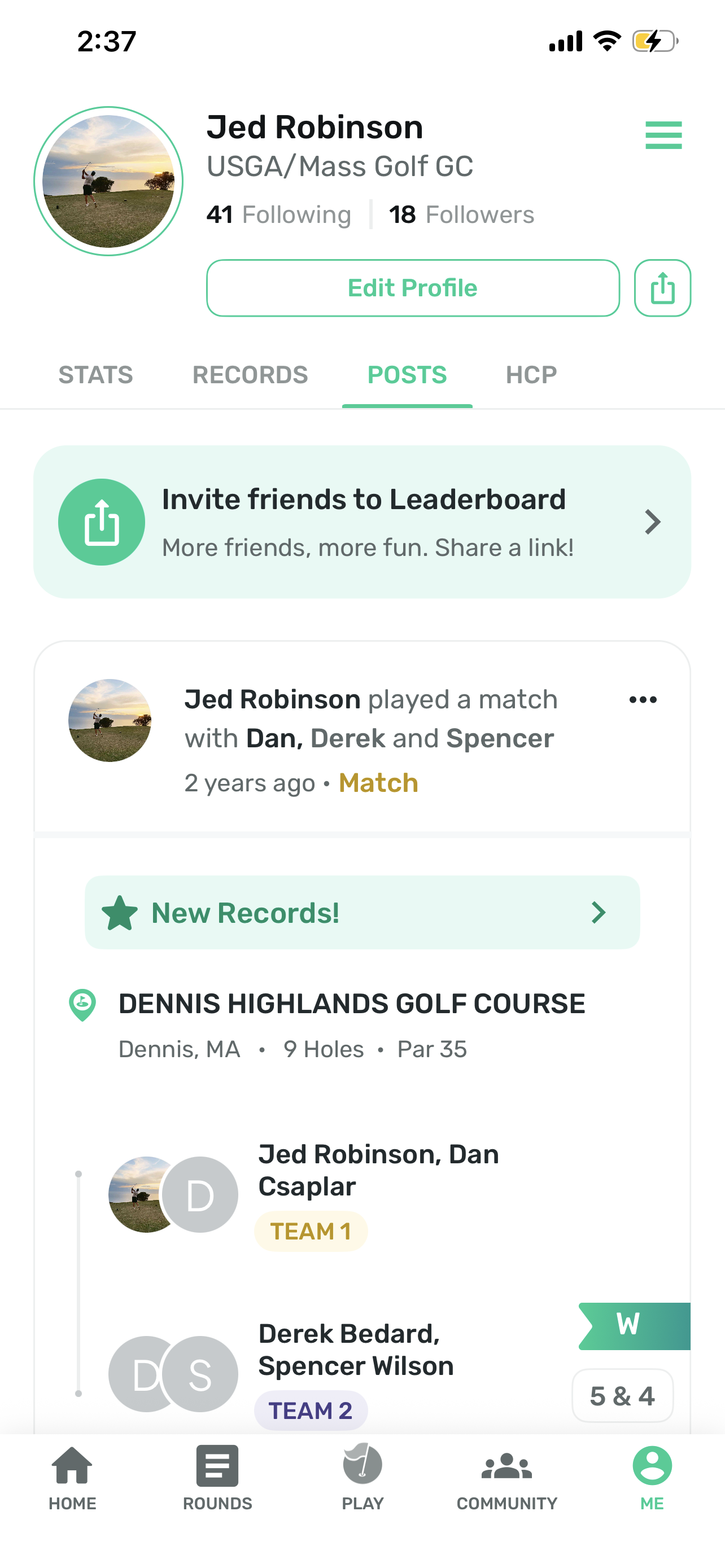
Finished rounds become shareable cards — maps, scores, and head-to-head results that pull the group back.
Getting four people into one game
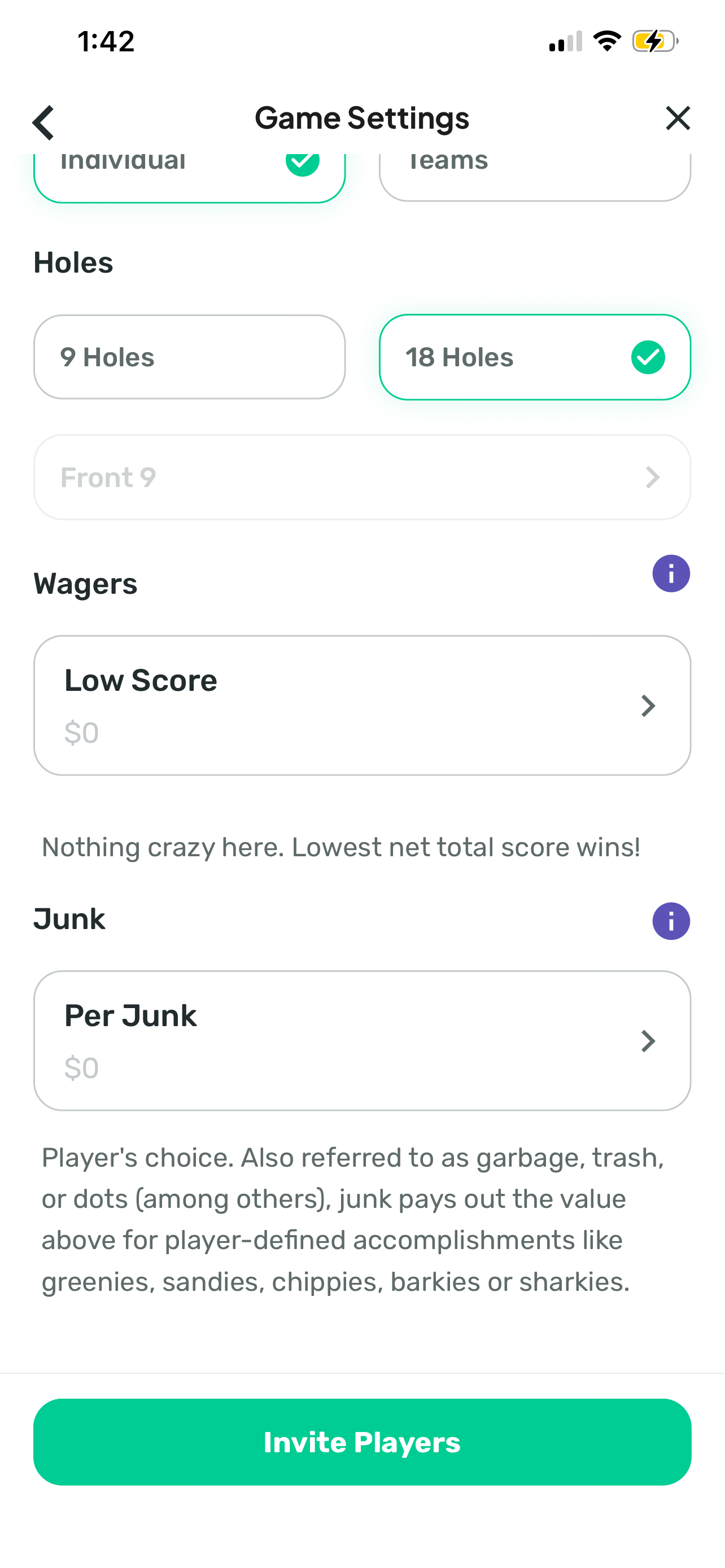
Setup is where most group golf apps lose people, so it's where I spent the most design effort. A host picks a course from recent and nearby lists, configures the game (Individual or Teams, 9 or 18 holes, optional wagers and "junk" side bets), then gathers players. The crucial move: you don't need everyone to have the app. You can search followed players, share a QR code at the tee, or create an offline guest — a real, scorable profile built from a name, handicap index, and preferred tees, with an optional phone number to invite them later. By the lobby, Leaderboard has already calculated each player's course handicap and stroke holes, so the group never does math.
Scoring you can do between shots
On the course, scoring competes with sunlight, gloves, gusts of wind, and a group waiting to move. So the live round screen leads with the one thing that always matters — strokes — entered with oversized +/− targets and a running hole header (yardage, par, handicap). Players who want more can expand a single card to log putts, greens and fairways in regulation with directional miss tracking, and penalty strokes, without that depth ever cluttering the default view. Every hole ends in one clear action: Save Hole. Fast for the casual scorer, deep for the stat nerd, never in the way.
Turning scattered rounds into a record
A single round is a moment; a profile is a story. The profile aggregates every round a player logs into something they'll actually return to: a scoring overview (average and low score), par-type breakdowns that reveal where the game is leaking strokes, a match record across individual and team play, all-time records, and an official Handicap Index posted directly to the USGA. The information architecture — Stats, Records, Posts, HCP — lets a casual golfer glance at their average and a serious one drill into fewest-bogeys-or-worse, from the same screen.
The round that lives on
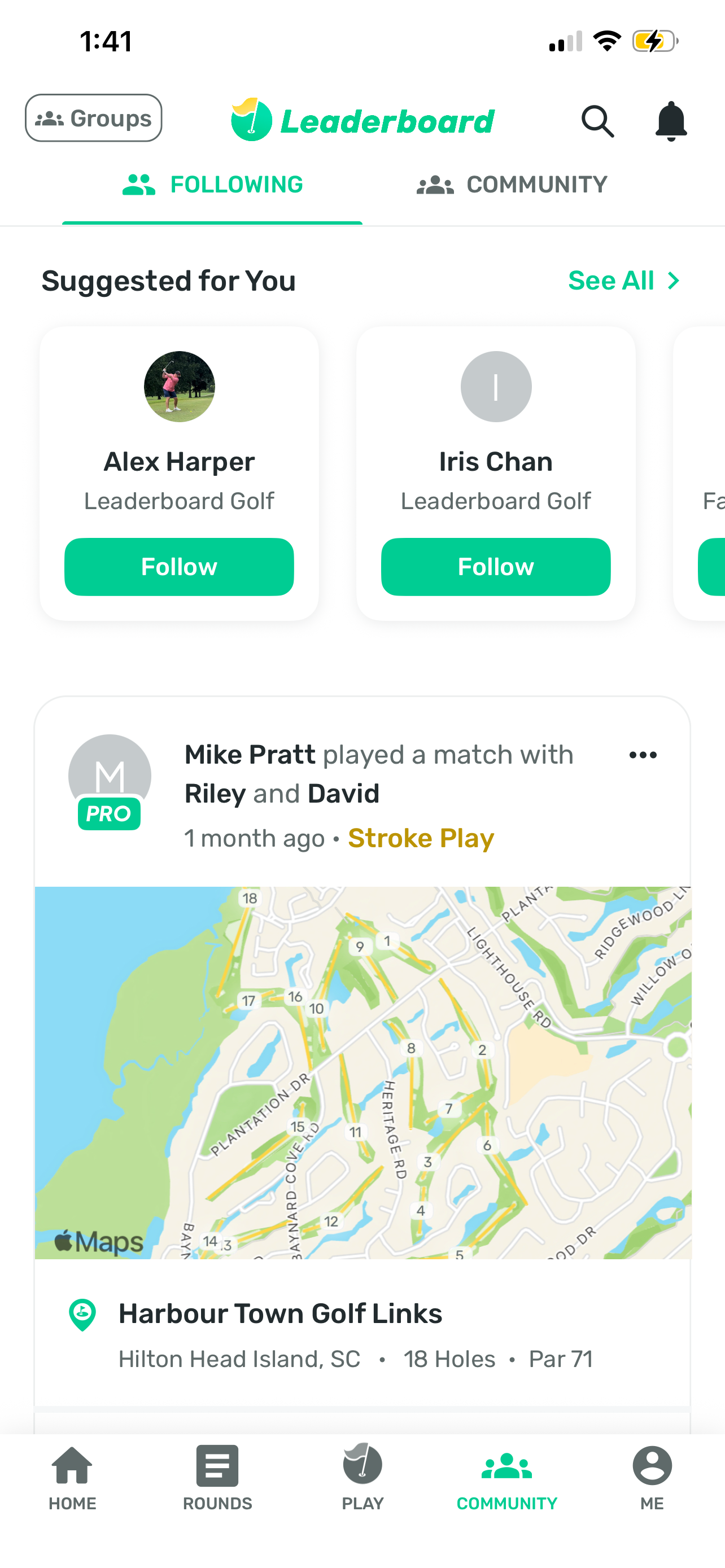
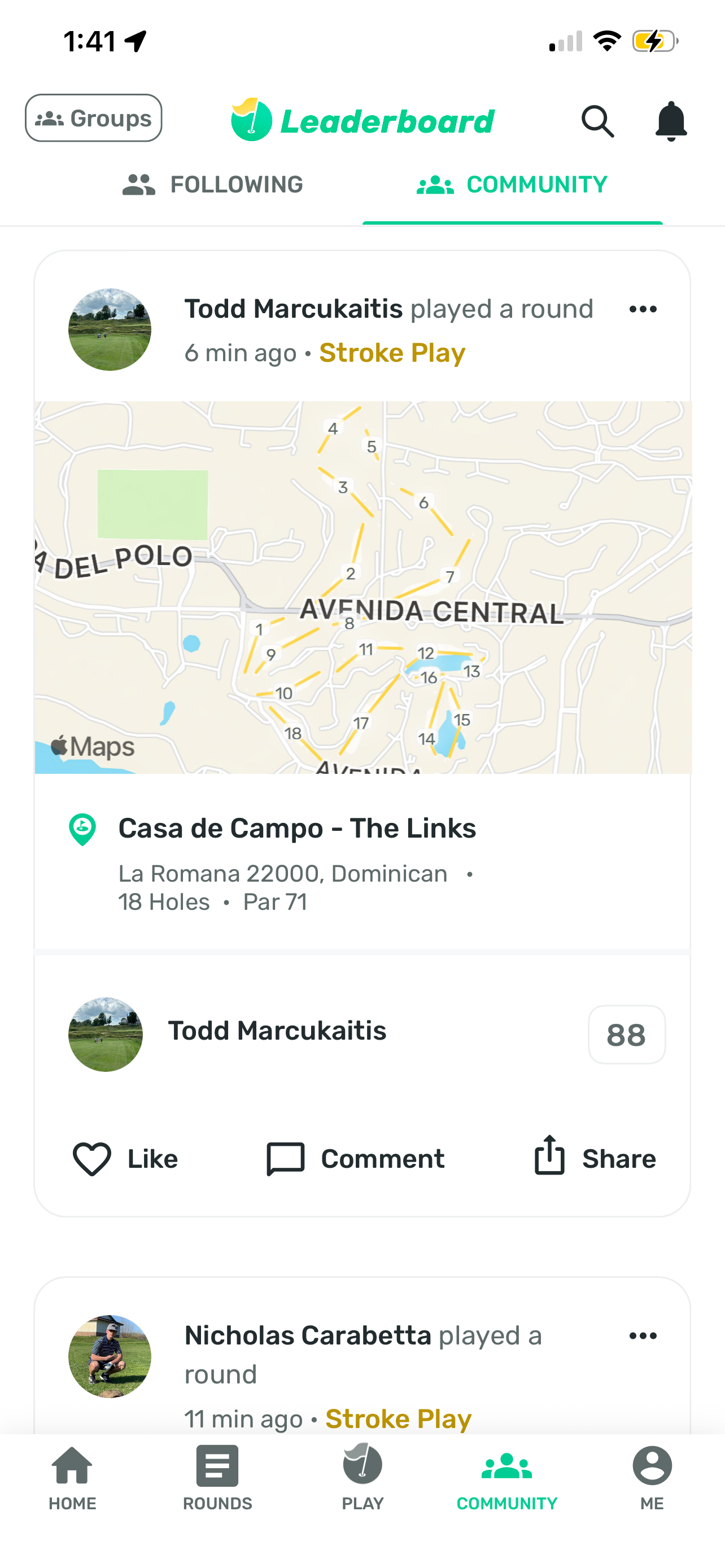
The best growth loop in social golf is the round itself. When a game ends, it becomes a feed card — the course map of the holes played, the format, final scores, and head-to-head results — posted to a Following feed of people you play with and a wider Community feed. Likes, comments, and shares turn a private scorecard into a reason to come back, and "Suggested for You" plus one-tap Follow keep the network growing. The card that broadcasts your round is the same card that pulls your friends into their next one.
Designed to be measured
Each flow was designed against a clear behavioral goal, so success could be read in the numbers, not just in screenshots.
Games completed per host
Setup friction is the top drop-off point in group golf apps — fewer taps from course to first tee directly lifts completed games.
Players per game
Offline guests and QR invites remove the "everyone needs the app" barrier, raising average group size.
Guest → signup conversion
An offline guest who gets invited by phone is a warm, pre-populated account waiting to activate.
Rounds shared & re-engagement
Auto-generated feed cards turn each finished round into a growth and retention surface.
What I'd refine next
If I were continuing the engagement, I'd pressure-test the scoring screen with players wearing a glove in bright sun — the +/− targets are large, but real-course conditions are the only honest test. I'd also tighten the bridge between an offline guest and their eventual signup, so the round history they were part of follows them into a real account automatically. And I'd give the feed card more range — a great round and a blowup deserve different treatments, and the social loop gets stronger when the card has a point of view.